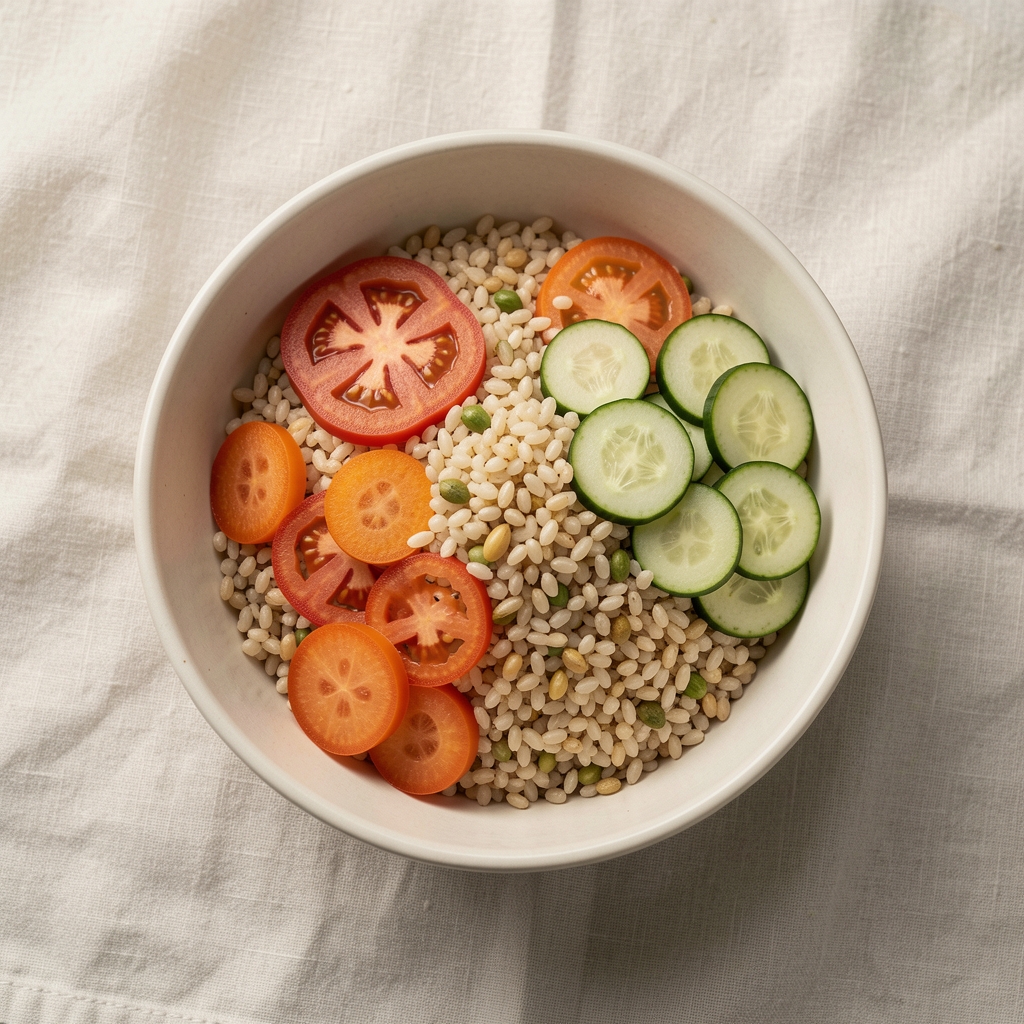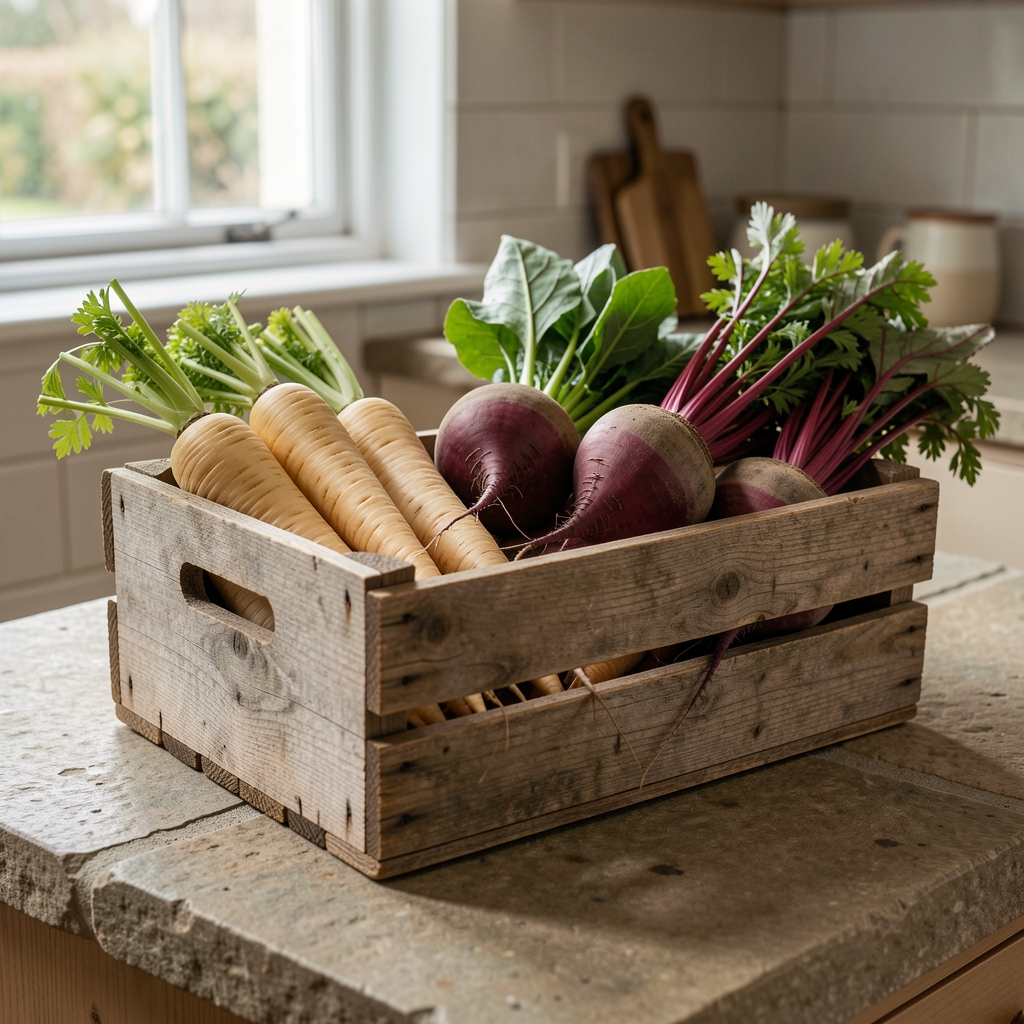
London, January 2026. A three-month field record of winter root vegetable preparation, kept from October through to the close of December. The subjects: parsnip, celeriac, swede, and beetroot, examined not as nutritional abstractions but as objects of the kitchen — their textures, their preparation times, the ways they absorb fat and acid and heat, and what they represent when the wider produce ledger grows lean.
October. The arrival of the roots.
The shift to root vegetables is not a single event. It happens gradually across October, as the market stalls begin replacing summer courgettes and tomatoes with muddier, heavier produce. The parsnip arrives first in most London markets, followed quickly by celeriac — that ungainly sphere of pale flesh whose peeling alone takes a considered minute. Swede comes shortly after, and beetroot, which has the advantage of being available year-round in most shops, takes on a different character when it is fresh and seasonal rather than pre-cooked in plastic packaging.
For this record, preparation notes were kept in a kitchen notebook updated after each evening of cooking. The format was deliberately plain: the vegetable, the preparation method, the quantity, the time, and a one-line observation on the result. Over three months, this yielded forty-three individual entries spanning twelve distinct preparation approaches. What emerged was not a recipe collection but a pattern — a picture of how these four vegetables shaped the texture and rhythm of cooking during the quieter months.
Roasting was the most common preparation across all four vegetables, appearing in twenty-six of the forty-three entries. This was not a deliberate choice at the outset — it was what the season seemed to call for. A cold kitchen, a heavy baking tray, a quantity of olive oil, and an hour of largely unattended heat. The results were consistent in a way that summer cooking rarely is. Root vegetables are forgiving. They do not over-cook quickly. They reward patience and neglect in roughly equal measure.
Parsnip: the most versatile of the four.
Parsnip appeared in seventeen of the forty-three entries, more than any other vegetable in this record. Its natural sweetness concentrates under roasting heat, forming caramelised edges that require no additional flavouring beyond salt and a fat source. The Gazette kitchen used butter in six entries, olive oil in nine, and a combination in two. The butter preparations were slightly richer and browned faster; the olive oil preparations were more neutral and worked better alongside acidic accompaniments.
The parsnip also appeared in soup preparations on four occasions. Here, a different character emerged: the sweetness that is an asset in a roasting tray becomes less distinct in a blended context unless balanced with something bitter or sharp. Two entries used a small quantity of aged cheddar stirred in at the end; one used a scattering of toasted seeds on top; one used nothing additional and was noted in the record as "flat but satisfying." All four preparations were eaten without reservation.
What the parsnip provides across a winter kitchen is not merely calories or fibre, though both are present in useful quantity. It provides a reliable result. In a season when many things narrow — daylight, social contact, outdoor range — a vegetable that behaves predictably under heat carries a quiet value that is difficult to quantify but easy to notice.
The root vegetable kitchen is a particular one. It is slower, heavier, and more forgiving than its summer counterpart. It rewards the cook who is not in a hurry.
Celeriac: the underused winter subject.
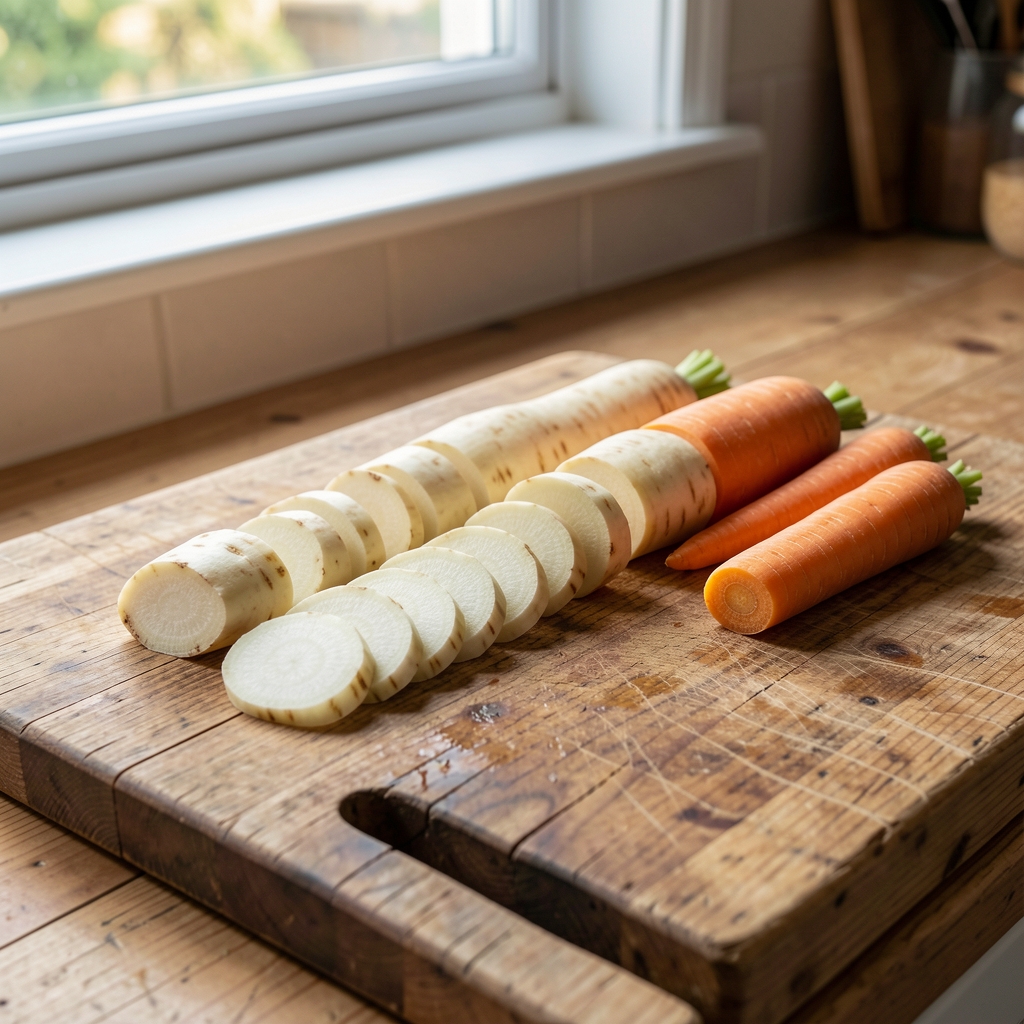
Celeriac appeared in nine entries. It is, of the four subjects, the one most likely to deter a new cook: its rough outer skin requires careful peeling, it discolours quickly once cut, and its flavour — a mild, earthy quality reminiscent of celery but calmer and more rounded — is not immediately legible to a palate that has not encountered it before. Two entries in this record were produced for people trying celeriac for the first time. Both responded positively, though neither identified it correctly in a blind tasting, guessing "some kind of potato" and "parsnip maybe."
The most successful preparation across the nine entries was a remoulade — celeriac grated raw and dressed with a mustard emulsion, eaten cold. This was also the quickest preparation: no heat required, twenty minutes from whole vegetable to finished portion. The texture after grating is firm and slightly fibrous, quite different from the softness it takes on under heat. The mustard dressing cuts through the mild earthiness and produces something that functions well alongside richer preparations.
Swede and beetroot: the closing quarter of the record.
Swede appeared in ten entries across the three months. Its character is coarser than parsnip and less delicate than celeriac — a dense, waxy flesh that holds its shape well under long cooking and makes it a natural addition to slow-cooked preparations. The record includes four entries in which swede was combined with other root vegetables in a single roasting tray, and in each case it retained its identity more clearly than the others, remaining distinct rather than softening into the overall composition.
Beetroot, appearing in seven entries, presented the most striking visual element of the record. Its deep crimson colour stains everything it contacts — hands, boards, other vegetables in the tray — and its preparation requires a particular acceptance of mess. The entries that included beetroot are, visually, the most dramatic pages in the notebook. Roasted with a drizzle of aged balsamic in three entries, it achieved a concentration of flavour that made small quantities feel sufficient. The notebook entry for one such occasion reads: "Three small beetroots, thirty grams of walnuts, half a bag of watercress. A complete meal by any useful measure."
- →Roasting was the dominant preparation method, used in over sixty per cent of entries, requiring minimal attention and yielding consistent results.
- →Parsnip was the most frequently prepared vegetable across the three months, valued for predictability and its response to fat and heat.
- →Celeriac remoulade — raw, dressed, cold — was the fastest preparation and produced the most consistently positive responses from first-time tasters.
- →Small quantities of beetroot, concentrated under high heat, produced meals that felt complete despite modest volume.
- →Winter root vegetables reward slow, uncomplicated attention. The season's narrowing produce range is as much an invitation to deepen as it is a constraint.
What this three-month record demonstrates is not that root vegetables are superior to any other category of produce. It is that they are underused as subjects for careful observation. The summer kitchen attracts more attention — more colour, more variety, more novelty. The winter kitchen, by contrast, offers depth. The same handful of vegetables, prepared differently, observed more closely, across a quarter of the year. The notebook from this period is the most detailed of any season kept for the Gazette, because the material slowed down enough to examine.
The Gazette plans to continue this seasonal kitchen survey through spring 2026, shifting the subject to the first allotment produce of the year — radishes, new-season spinach, and the brief window of forced rhubarb that appears in February. Notes will be filed in the usual format.
Articles published on Traven Gazette are editorial in nature and reflect the writers' observations on everyday wellness practices. The content is not intended as professional advice, nor as guidance for the management of any specific condition. Readers with specific concerns about their daily routines are encouraged to speak with a qualified wellness professional.